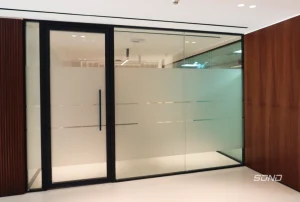

Office Partition Dubai: The Practical Guide to Glass, Acoustic Privacy, Compliance, and Costs for Modern Workspaces
A Dubai-focused, decision-maker guide to partition types, real privacy, fit-out approvals, and cost drivers.
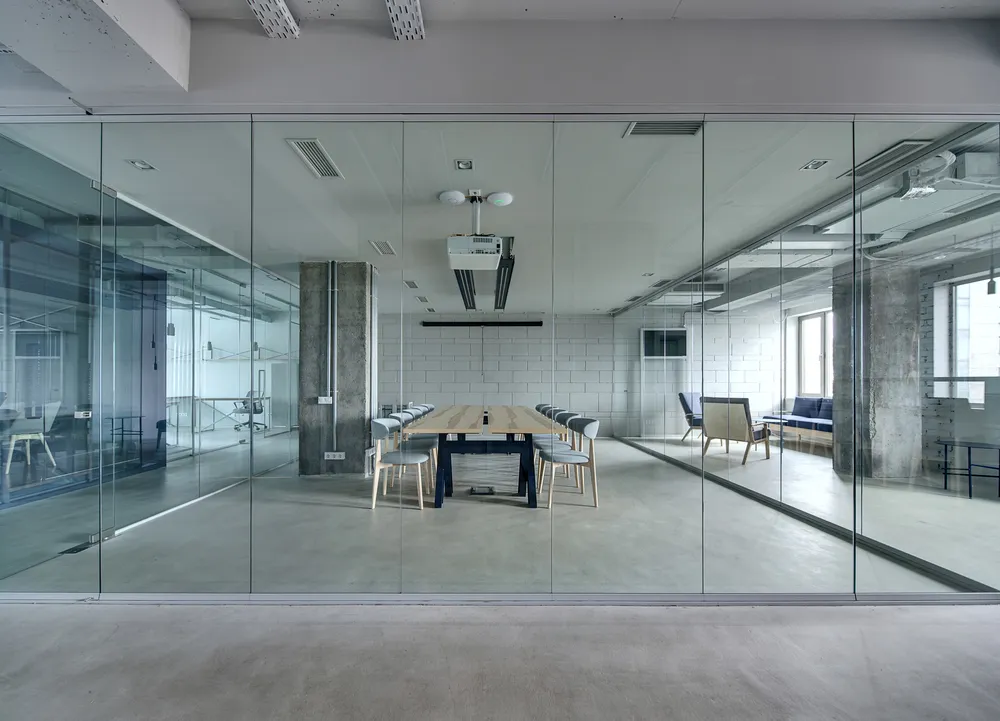
If you searched office partition Dubai, you’re probably trying to solve a real workplace problem: your office needs better privacy, better meeting space, or simply a cleaner layout that feels organized without turning the whole floor into solid walls.
In Dubai, partitions aren’t only about appearance. They affect speech privacy, noise levels, light distribution, fit-out approvals, and how quickly your team can move into the space. The right partition system can make a workspace feel calm and professional. The wrong one can create echo, distraction, and constant “everyone can hear everything” discomfort.
This guide is written to help you choose office partitions like a decision-maker, not like someone comparing random photos online. It covers partition types (glass, modular, acoustic, demountable), what “soundproof” means in real offices, which compliance steps companies often miss in Dubai fit-outs, and a checklist you can use when comparing contractors and quotations.
If you want to see SONO’s service page for reference, here it is: Office Partitions.
Quick answer: What is the best office partition in Dubai?
- If you want daylight and a premium look, choose glass partitions (frameless or framed).
- If you need real meeting-room privacy, specify acoustic partitions (often double-glazed or laminated acoustic glass) and focus on sealing details.
- If you want flexibility for future changes, choose demountable/modular systems that can be reconfigured.
- If you need cost control and strong separation, drywall/gypsum partitions may fit, but they reduce light and can feel heavy if overused.
In every case, the best results come from treating the system as a whole: glass + frame + door + seals + installation quality, not only the panel material.
What counts as an office partition in Dubai fit-out projects?
An office partition is any system used to divide space inside a workplace. Unlike permanent masonry walls, partitions are commonly installed during fit-out because they are faster to build, easier to adjust later, and often better for modern office planning.
In Dubai, partitions are used for:
- Meeting rooms and boardrooms
- Executive offices
- Reception and client zones
- Quiet rooms and phone booths
- Team zones inside open-plan floors
- Training rooms and multipurpose spaces
- Corridor separation and access control
The goal is usually one (or more) of these:
- Control what people can hear (speech privacy)
- Control movement and traffic flow
- Keep daylight while creating functional rooms
- Create a professional layout without rebuilding the core structure
Types of office partitions in Dubai (and where each one works best)
1) Frameless glass office partitions
What they are: Large glass panels joined with minimal visible framing.
Best for:
- Executive offices
- Meeting rooms where aesthetics matter
- Reception and client-facing spaces
Pros:
- Maximum light flow
- Premium look
- Makes spaces feel larger
Cons:
- Privacy requires film/blinds/smart glass
- Acoustic performance depends heavily on seals and doors
2) Framed glass office partitions
What they are: Glass panels held in aluminum framing.
Best for:
- Most commercial offices
- Floors that need predictable performance and clean installation
Pros:
- More stable for doors and hardware
- Better control of sealing and alignment
- Often easier to deliver consistent finish
Cons:
- Slightly less “minimal” than frameless systems
3) Acoustic glass partitions (single or double-glazed systems)
What they are: Glass partition systems designed specifically for speech privacy and reduced sound transfer. Often use special laminated glass, double glazing, and tighter seals.
Best for:
- Boardrooms
- HR rooms
- Legal/finance offices
- Therapy/consultation rooms
- Meeting rooms in noisy open-plan floors
Pros:
- Better speech privacy when specified and installed correctly
- Keeps daylight while reducing distraction
Cons:
- Cost increases with acoustic glass type, thickness, and door systems
- “Acoustic” performance is easy to ruin with weak sealing or poor door detailing
For examples of acoustic-ready systems and sealing-focused installation, see Office Partitions.
4) Solid demountable/modular partitions
What they are: Factory-made wall panels that can be disassembled and reinstalled.
Best for:
- Offices that expect to expand, sublease, or reconfigure
- Fit-outs where future change is a real possibility
Pros:
- Reconfigurable and reusable
- Cleaner construction (less dust than traditional building)
- Can offer good acoustic performance when built correctly
Cons:
- Visual openness is lower than glass unless combined with glazing sections
5) Gypsum/drywall partitions
What they are: Traditional internal walls built using studs + boards + finishing.
Best for:
- Back-office zones
- Storage and service rooms
- Areas where maximum visual privacy is needed
Pros:
- Strong separation
- Often cost-effective
- Easy to paint and match interiors
Cons:
- Reduces daylight
- Can make a floor feel smaller if overused
- Acoustic performance depends on insulation, thickness, and detailing (doors are still the weak point)
6) Operable/folding partitions (flexible spaces)
What they are: Moveable systems that open and close to create larger or smaller rooms.
Best for:
- Training rooms
- Multipurpose meeting areas
- Spaces with variable occupancy
Pros:
- Flexible space use without permanent construction
- Useful for offices that host workshops or events
Cons:
- Acoustic performance varies widely by product and installation quality
- More mechanical parts to maintain
Acoustic privacy 101: What “soundproof” really means in offices
In office design, the goal is often not absolute silence. The goal is speech privacy: people shouldn’t clearly understand conversations from the next room, and meeting rooms shouldn’t leak confidential discussion into open-plan areas.
This matters because speech noise is one of the top sources of dissatisfaction in open-plan offices. For background and research context, see:
- UC Berkeley CBE – Workplace Research (Acoustics & Speech Privacy)
- ISO – Making open-plan offices work (distraction and privacy distance)
Speech privacy vs “quiet”
- Quiet means lower overall noise.
- Speech privacy means conversations become unintelligible outside the room.
You can have an office that isn’t “quiet,” but still has good privacy in meeting rooms if the right partition system is used.
Why speech is more distracting than other noise
Speech contains information your brain tries to process—even when you don’t want it. That’s why meeting rooms and call zones should be planned as acoustic zones, not just visual zones.
STC vs dB: how to compare specs without getting confused
You’ll see two types of performance talk:
- dB reduction: often used in marketing. It can be meaningful, but it must be tied to a defined test setup.
- STC (Sound Transmission Class): a standardized rating used to compare how well a partition reduces sound transmission across a frequency range.
A simple rule: If someone promises “soundproof” without a clear rating or test reference, treat it as a claim, not a spec.
If your contractor mentions STC, ask:
- What STC range is expected for the full system (including door)?
- Is the performance tested or estimated?
- What sealing and door details are included to reach it?
Even the best glass can fail if air leaks around edges. That’s why sealing and installation details matter as much as the panel choice.
Glass choices and privacy options that work in real offices
Tempered glass
Often used for safety and strength. Good for most standard partitions.
Laminated glass (including acoustic interlayers)
Two layers of glass bonded with an interlayer. In partitions, this can help reduce vibration transfer and improve perceived privacy.
Double-glazed partition systems
Two panes with a cavity can improve acoustic performance, especially when combined with correct framing and seals. However, the door and perimeter sealing still decide the real outcome.
Privacy options
If the office wants light but not visibility, you can add:
- Frosted film (bands or full film)
- Integrated blinds (common in higher-end systems)
- Switchable/smart glass (instant privacy, higher cost)
The key is to align privacy choice with function:
- Boardrooms: stronger privacy requirement
- Team rooms: moderate
- Executive offices: often visual privacy but still keep light
Dubai compliance and fit-out approvals: what businesses overlook
Dubai fit-out work often involves more than just choosing materials. Many buildings and zones require approvals, NOCs, or compliance with codes and safety requirements. The exact process depends on where the office is located and the building management rules.
Practical references you can use when planning documentation and approvals:
- Dubai Development Authority – Circular 409 (Dubai Building Code)
- JAFZA Fit Out Manual (Reference Materials)
What you should do (simple and safe): Before finalizing a partition plan:
- Ask building management what approvals are required for partitions, doors, and any structural attachments.
- Confirm whether fire safety and egress requirements affect the partition layout.
- If acoustic partitions include doors with seals, confirm door swing clearance and corridor width requirements.
This avoids the worst-case scenario: ordering a full system and then discovering it needs changes due to compliance.
Office partition cost in Dubai: what actually drives the price
Many people search “office partition Dubai price” expecting a single number. The honest answer: cost is driven by specification, not only by square meters.
Here are the biggest cost drivers:
1) System type (frameless vs framed vs modular)
- Frameless glass systems can increase hardware and finishing cost.
- Framed systems may be more predictable in performance and alignment.
- Modular/demountable systems often cost more upfront but can save money later if you reconfigure.
2) Glass specification
- Tempered vs laminated vs acoustic laminated
- Thickness and panel size
- Single vs double-glazed partitions
3) Door type and door detailing
Doors are where many “acoustic partitions” fail:
- Sliding doors often leak more sound than well-sealed hinged doors.
- Drop seals, perimeter seals, and frame alignment matter for privacy.
4) Site conditions and working hours
- Night work or weekend work (common in occupied buildings)
- Lift access limitations
- Loading bay restrictions
- Working around existing furniture and systems
5) Finishes and extras
- Powder-coated aluminum colors
- Frosted film design
- Smart glass
- Access control integration
Best practice: Don’t compare quotes unless they include the same specification. Two quotes can look similar in total price while being completely different in glass type, door quality, and sealing.
How to choose the right partition system for your office (decision framework)
Use this simple framework.
If your priority is daylight and a premium look
Choose glass partitions, but decide privacy early:
- Full clear glass for openness
- Frosted film for meeting rooms
- Blinds/smart glass for higher privacy needs
If your priority is real meeting-room privacy
Focus on an acoustic system and details:
- Acoustic glass package (laminated/double-glazed)
- Sealed perimeter frameworks
- Proper door seals and hardware
- Avoid vague “soundproof” claims without performance direction
If your priority is flexibility for future changes
Demountable/modular partitions are often a better business decision:
- Layout changes become easier
- Reuse reduces future waste and cost
If your priority is strict compliance in managed buildings/free zones
Start with the approval requirements:
- Confirm NOC/approval process
- Align layout with fire/egress expectations
- Choose contractors who support documentation, not only installation
Installation timeline: what to expect in Dubai offices
Office partition projects usually follow a standard flow. Even if you choose a different contractor, your project should follow a similar structure:
- Site survey and measurement
- Layout and design drawings (including door locations and privacy treatment)
- Approval stage (as required by building/zone)
- Fabrication
- Installation (usually fast if well planned)
- Final alignment, cleaning, and handover
- After-service support (adjustments are normal after settling)
A clean installation with minimal disruption is often more about planning than speed. If you’re in an operational office, insist on:
- Clear working hours
- Protection and dust control plan
- Daily cleanup commitment
- Staged installation if needed (meeting rooms first, open-plan later)
Quality checklist: how to compare an office partition company in Dubai
Use this checklist when you’re selecting a contractor.
A) Company and capability
- Trade license and fit-out experience
- Portfolio with similar projects (not only product photos)
- Ability to handle drawings and approvals support where needed
B) System specification (get it in writing)
- Glass type and thickness
- Frame system type and finish
- Door type, door seals, and hardware approach
- Privacy treatment (film/blinds/smart glass)
- Acoustic intent (speech privacy target, not vague “soundproof”)
C) Installation details (where the results are decided)
- Perimeter sealing method (internal and external)
- Corner finishing and joint quality
- Alignment and tolerance checks
- Protection of existing floors and ceilings
D) Warranty and after-service
Hardware adjustments and seal checks are normal. Ask:
- What is the service response time?
- What parts are covered (hardware, seals, film)?
- What is excluded?
Maintenance and long-term performance
Office partitions last longer when maintenance is simple and consistent.
For glass partitions
- Use non-abrasive cleaners and microfiber cloths
- Avoid harsh chemicals on films or coated glass
- Check door alignment periodically (hinges and closers settle)
For acoustic performance
If privacy drops over time, it’s often due to:
- Damaged seals
- Door misalignment
- Gaps introduced by wear
Fixing seals is usually cheaper than changing the glass. This is why after-service matters.
Sustainability and indoor comfort (why it helps your business case)
Sustainability isn’t only a branding line. In fit-outs, it affects:
- Future flexibility
- Waste reduction during reconfiguration
- Daylight access and comfort
Demountable systems can reduce waste when you move or expand. Glass partitions can improve daylight distribution, which reduces reliance on artificial lighting in some layouts. Even in Dubai, where cooling load dominates, daylight can still support visual comfort when glare control is planned well.
FAQ: Office partition Dubai
1) What is the best office partition type in Dubai for meeting rooms?
For meeting rooms, choose a system that supports speech privacy: acoustic glass partitions with strong perimeter sealing and properly sealed doors. The door is often the biggest factor.
2) Are glass office partitions private enough for calls?
Clear glass partitions look premium, but privacy depends on acoustic specification and sealing. For visual privacy, add frosted film, blinds, or smart glass.
3) What does STC mean for office partitions?
STC is a rating that helps compare how well a wall/partition reduces sound transmission. Ask what STC range the full system is designed to achieve, including doors and seals.
4) Do office partitions need approvals in Dubai?
Often yes, depending on your building, location, and scope. Many fit-outs require building management NOCs and compliance checks. Start by confirming the process for your site.
5) How long does office partition installation take in Dubai?
It depends on the size of the office and the approval/fabrication timeline. Installation itself can be fast, but measurement, drawings, approvals, and fabrication are the stages that set the schedule.
Conclusion: choose partitions for privacy, performance, and future flexibility
The best office partition Dubai solution is the one that matches how your team works. A reception area needs clarity and style. A meeting room needs speech privacy. An open-plan floor needs zones that reduce distraction without killing light and openness.
If you remember one thing, make it this: privacy is a system outcome. Glass type matters, but seals, frames, doors, and installation quality decide whether the room feels professional or frustrating.
If you want to review SONO’s approach and system options, visit Office Partitions.
For a site visit or quotation request, use Contact.